W hen I landed in Coimbatore a few months ago, I came from the cool, sterilised environment of first-world veterinary medicine where zoonotic diseases and car accidents were a rare addition to the day’s patient list, and where an unvaccinated dog would draw suppressed gasps of shock and condemnation. In the UK, we have no street dogs; if a dog runs up to you in London, you’re more likely to scream with delight than fear. Of course, as any vet will tell you, veterinary practice is always hectic and unpredictable: in England it is just different. As a self-professed infectious diseases nerd, I wanted to see those elusive, dangerous cases for myself, and translate textbook epidemiological theories into practice. So, twelve vaccines, four finals exams, two visa disasters, and one graduation later, I arrived at the hot, dusty battle-grounds, on the front-line of veterinary public health: at Humane Animal Society, Coimbatore.
The range of cases I saw in just one fortnight was staggering. In my head, they run like the ABCs: abuse, burns, brain trauma, rabies, caesarians, deadly dystocias, eyes popped out, femurs snapped, rabies, gargantuan tumours, horrific hernias, intestinal worm obstructions, jaundice, kidney failures, lungs-lobe torsions, maggots, meningitis, rabies, neonatal sepsis, organophosphate mass-poisonings, parvo, peacocks, peritonitis, rabies, quadriplegia, starvation and ... did I mention rabies? The most lethal disease on our planet; a risk with every admission. Complex polytraumas, severe soft tissue injuries, and tropical diseases were quotidian admissions: a fact I still struggle to reconcile, considering my final-year of small-animal clinical teaching was conducted at one of Europe’s largest referral hospitals. If someone had turned up with a flying pig, it wouldn't have surprised me.
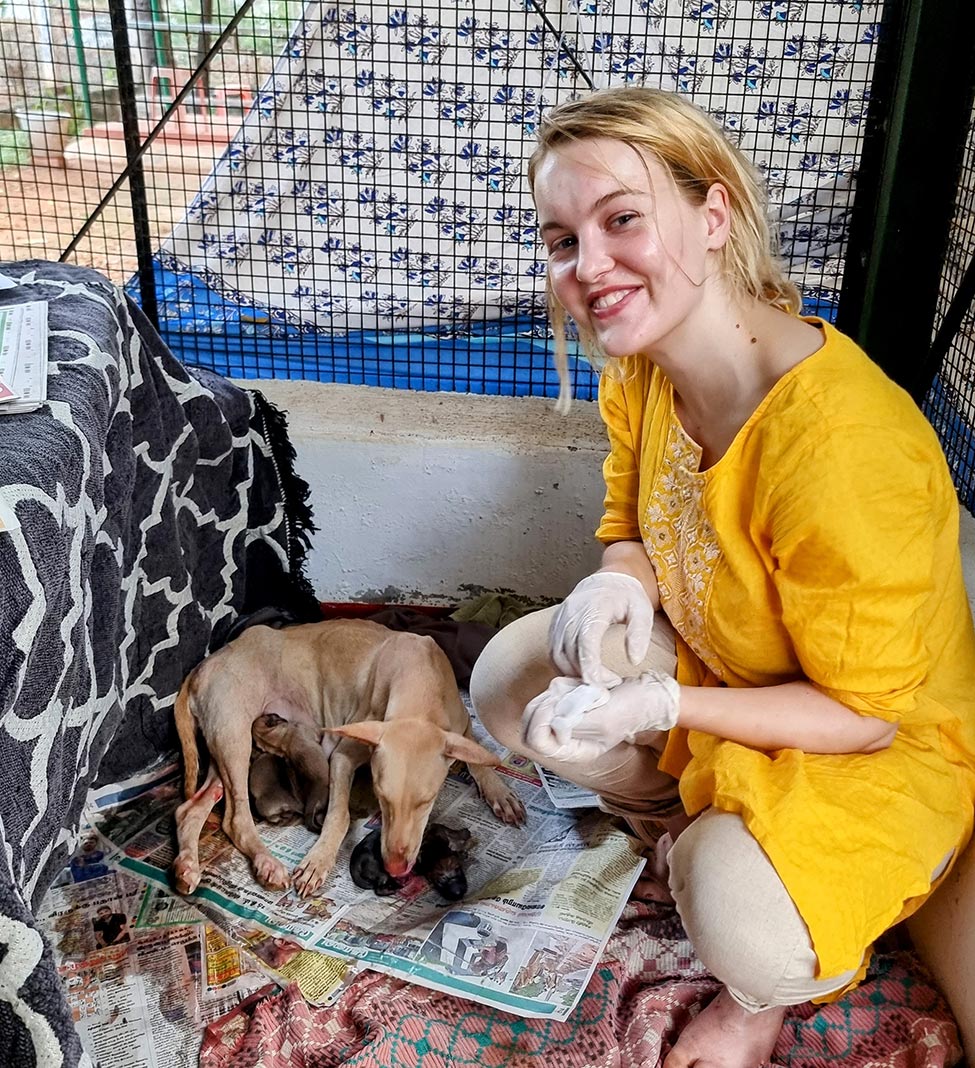
Listing the concentrated caseload like this sounds like a horrible orgy of suffering and injury. Of course, in the UK, these dogs would be admitted to hospitals or specialist intensive care units. Such expensive care is hardly affordable for a clinic treating thousands of street dogs per year. Yes, watching a puppy be eaten alive by maggots is shocking, but seeing them recover and flourish is even more impressive. Gold standard care is the best care you can provide in situ, and, despite the very limited budget, the team were full of creative solutions. Textbooks cannot be made large enough for the lessons on compassion I learnt from the team.
How can words describe this team? Such tireless kindness is rare and special. Resilient and focused, they are the One Health vanguard of Coimbatore, saving the lives of animals and humans. True unsung heroes, who, with sublime ease, managed cases which would make even the staunchest surgeons gulp with apprehension.
What better example of this holistic approach than on World Rabies Day: in the sweltering heat, we raced through the back streets of Coimbatore, hunting for street dogs. Our weapons of choice were needles, syringes, vaccines and dog nets. We vaccinated over 120 dogs, and spoke to nearly 200 citizens on rabies prevention. Sadly, many did not know what rabies was; some children said “if a dog is growling, it wants to play with you!”. One hundred children die every day from rabies. That’s why HAS was simultaneously hosting shelter tours for schools and businesses, lecturing at universities, and engaging with local newspapers.
HAS is primarily funded by donations from good samaritans. Securing international funding contracts from larger, wealthier charities is competitive. Yet, they are a keystone tool in safeguarding the health and safety of 4 million people in Coimbatore. One cannot help but be in awe of how much they achieve on such a limited budget. They understand that stopping animal suffering, mitigating the burden of zoonotic diseases, and defending planetary health means working together. Community action: that’s their secret weapon. I look forward to returning to fight for their cause, and implore you to fund their work. It may save your life.